
I remember sitting in my grandmother’s kitchen, the air thick with the smell of burnt flour and rosemary, watching her try to explain a family recipe to my ten-year-old cousin who was more interested in his phone than her stories. It was a messy, loud, and honestly frustrating moment, but it was also the exact second I realized that true intergenerational bonding cycles aren’t about scheduled “family bonding days” or expensive retreats. They aren’t some polished, clinical process you find in a self-help manual; they are found in the friction of two different worlds trying to occupy the same small space.
I’m not here to sell you on some high-concept theory or tell you to buy a specialized workshop to fix your family dynamics. Instead, I want to pull back the curtain on what actually works when you stop trying to force the connection and start embracing the chaos. I’m going to share the raw, unvarnished lessons I’ve learned about bridging the gap between the old guard and the new blood. We’re going to talk about how to build those cycles through real, everyday interaction, without the unnecessary fluff or the performative nonsense.
Table of Contents
The Ghost in the Room Breaking Generational Trauma
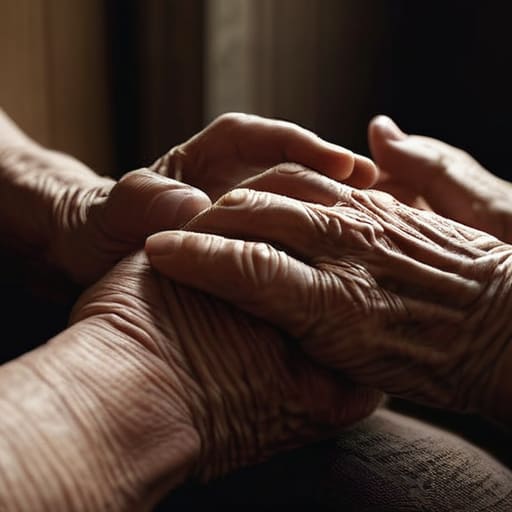
Sometimes, the things that pull families apart aren’t just simple disagreements; they are the heavy, invisible patterns we inherit without ever asking for them. We like to think we start with a clean slate, but we’re often walking around with scripts written by people we never even met. This is the reality of breaking generational trauma—it’s not just about fixing a single argument, but about recognizing the deep-seated habits and fears that have been passed down like heirlooms.
When we look at these patterns through the lens of family systems theory, it becomes clear that no one person is an island. We are all nodes in a much larger, much older web. If a grandparent grew up in survival mode, that tension might trickle down to a parent, and eventually, it lands on a child who has no idea why the air in the house feels so heavy. To change the cycle, we have to be willing to sit with that discomfort and name the “ghosts” in the room. Only by acknowledging these invisible threads can we finally begin building healthy family dynamics that actually allow the next generation to breathe.
Mapping the Blueprint Family Systems Theory in Action

To understand why we react the way we do, we have to stop looking at individuals in isolation and start looking at the whole web. This is where family systems theory comes in. Think of your family not as a collection of separate people, but as a complex, living organism where every movement by one person sends a ripple through everyone else. When a parent struggles with unaddressed anxiety, it isn’t just their private battle; it becomes part of the invisible architecture that shapes how their child perceives safety and trust.
Sometimes, the best way to step out of these heavy family patterns is simply to find a space where you can be yourself without the weight of expectation. If you’re feeling stuck in those old roles, finding a way to reconnect with your own personal agency can be a huge turning point. I’ve found that even looking into casual ways to meet new people, like exploring free sexkontakte, can act as a small but vital reset for your sense of autonomy outside the family unit.
By mapping these patterns, we move away from blame and toward clarity. We start to see how the transgenerational transmission of values—both the beautiful ones and the destructive ones—actually functions in real-time. It’s about recognizing that we aren’t just born into a lineage; we are born into a set of established roles and reactions. Once you see the blueprint, you gain the power to redesign it, shifting the focus from merely surviving the family unit to actively building healthy family dynamics that can actually sustain the next generation.
How to Actually Bridge the Gap Without Losing Your Mind
- Stop trying to win the argument and start looking for the story. Most of our family fights are just old scripts playing out; if you ask “Why did you learn to handle things this way?” instead of “Why are you being like this?”, the whole energy shifts.
- Create “low-stakes” ritual spaces. You don’t need a deep, soul-searching dinner to bond. Sometimes it’s just a Sunday morning coffee or a specific way you always play a card game—it’s the repetition, not the intensity, that builds the bridge.
- Learn the language of their era. It’s easy to dismiss a grandparent’s views as “outdated,” but if you can translate their values into a context you actually understand, you stop seeing them as an adversary and start seeing them as a person navigating a different world.
- Be the circuit breaker. If you see a pattern of silence or anger that has been running in your family for decades, you have to be the one to say, “We don’t do that here anymore.” It’s exhausting, but it’s the only way to stop the cycle from hitting the next generation.
- Value the “unproductive” time. We’re obsessed with “doing” things together, but real bonding happens in the gaps—the quiet car rides, the sitting on the porch, the moments where nobody is performing. That’s where the real connection lives.
The Bottom Line: Turning Theory into Connection
Real healing isn’t about erasing the past, but about spotting those old, toxic patterns before they get passed down to the next generation.
Understanding how your family actually functions as a system makes it way easier to change your role within it—and stop the cycle of dysfunction.
Building a bridge between the old and the young isn’t just a nice idea; it’s how we keep our history alive while making room for new ways of being.
## The Living Bridge
“We aren’t just inheriting eye color and last names; we’re inheriting the rhythms of how we love and how we hurt. Breaking a cycle isn’t about erasing the past, it’s about finally deciding which parts of the story are worth carrying forward.”
Writer
The Legacy We Choose
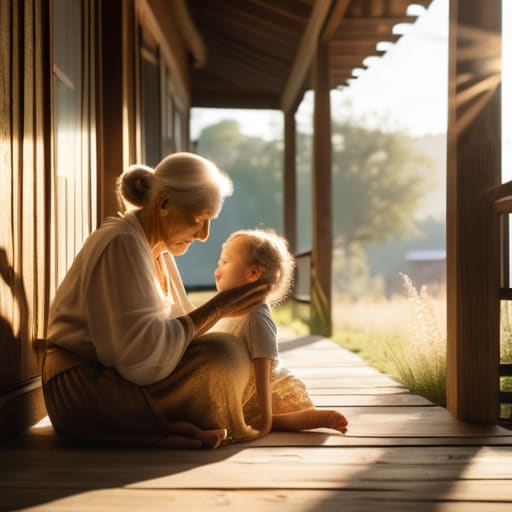
At the end of the day, understanding these cycles isn’t just some academic exercise in family systems or a way to dissect old wounds. It’s about seeing the invisible threads that tie us to those who came before us and those who will follow. We’ve looked at how trauma can haunt a lineage like a ghost, and how we can use a new blueprint to build something sturdier. By recognizing these patterns, we stop being passive passengers in our own family histories and start becoming the architects of a much healthier, more intentional way of living.
This work isn’t always easy, and it certainly isn’t linear. There will be days when the old patterns feel too heavy to lift, but remember that every small shift you make ripples outward. You aren’t just healing yourself; you are literally rewriting the future for every generation that comes after you. You have the power to take the broken pieces of the past and weave them into a story defined by resilience rather than repetition. The cycle doesn’t have to be a loop of the same mistakes—it can be a climb toward something better.
Frequently Asked Questions
How do I start fixing these patterns if my family refuses to even acknowledge that a problem exists?
This is the hardest part, isn’t it? When you’re the only one holding the mirror up, it feels like you’re shouting into a void. Here’s the truth: you can’t force someone to see a pattern they aren’t ready to face. Stop trying to win the argument and start focusing on your own boundaries. You break the cycle by refusing to play the old roles, even if they try to pull you back in.
Is it possible to break a cycle of trauma without completely cutting ties with my relatives?
Absolutely. In fact, cutting ties is often the nuclear option, not the only option. You can redraw the boundaries without burning the whole house down. It’s about shifting from “unfiltered access” to “intentional connection.” This means deciding which conversations are safe, which topics are off-limits, and how much emotional energy you’re willing to spend. You aren’t erasing your history; you’re just refusing to let it dictate your future. You can love them from a distance that keeps you sane.
How can I tell the difference between a healthy family tradition and a toxic pattern that's just being passed down?
It really comes down to how the tradition feels once the “performance” is over. A healthy tradition leaves you feeling grounded, connected, or even a little bit tired in a good way—like you’ve shared something meaningful. A toxic pattern, though? That leaves a hollow pit in your stomach. If you’re participating out of fear, guilt, or a desperate need to keep the peace, it’s not a tradition anymore; it’s just a survival tactic.
