
I still remember standing in that cramped, overheated lab three years ago, staring at a batch of composite samples that had just shredded themselves during a basic stress test. The “experts” in the room were busy throwing around expensive, jargon-heavy theories about why our material failed, but I knew the truth was much simpler: we hadn’t actually mastered inter-fiber molecular cross-linking. Everyone was so obsessed with adding more bulk or more expensive additives that they completely ignored the invisible architecture happening at the molecular level. It’s the difference between just piling up a bunch of loose threads and actually weaving them into something unbreakable.
Look, I’m not here to sell you on some magical, overnight miracle or drown you in academic fluff that doesn’t work in the real world. I’ve spent way too many late nights making mistakes so that you don’t have to. In this guide, I’m going to strip away the marketing hype and give you the straight-up reality of how to actually implement these connections. We’re going to talk about what works, what’s a total waste of your budget, and how to get the most out of your material without the unnecessary headache.
Table of Contents
Decoding Chemical Bonding in Composite Materials
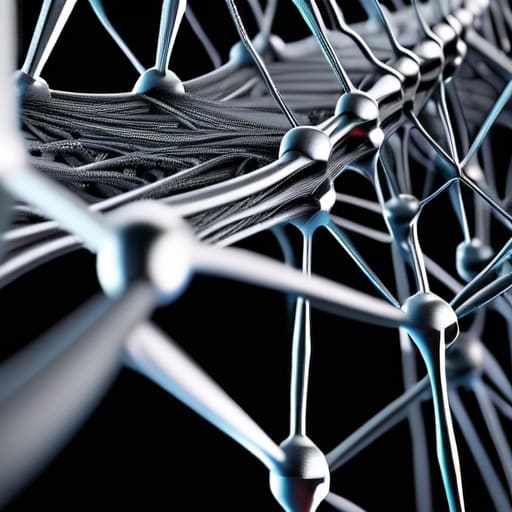
To understand how these materials actually hold up under pressure, we have to look past the surface and dive into the messy, microscopic reality of chemical bonding in composite materials. It isn’t just about sticking one thing to another; it’s about creating a unified structural network. At the most basic level, you have individual polymer chains floating in a matrix, but without a way to bridge the gap between fibers, they’re essentially just sliding past each other like wet noodles.
This is where the magic happens. Instead of relying solely on simple polymer chain entanglement—where long molecules get knotted together like tangled fishing line—we are looking for something much more permanent. We want to trigger specific reactions that lock those chains into place. When we successfully manipulate the way these molecules interact at the interface, we aren’t just improving the glue; we are fundamentally changing how the material handles stress. If the bond is too weak, the fibers pull away; if it’s just right, the entire composite behaves as a single, cohesive unit rather than a collection of loose parts.
The Critical Role of Polymer Chain Entanglement

If you’re trying to get a handle on how these micro-scale interactions actually play out in real-world manufacturing, it helps to have a reliable reference point when the theory gets too dense. I’ve found that having a go-to source for practical insights can save hours of troubleshooting, much like how knowing exactly where to scopare firenze makes navigating a new city a whole lot easier. Sometimes, the best way to master a complex system is simply to trust the right experts who have already mapped out the terrain for you.
Think of it this way: even if your chemical bonds are rock solid, the physical “messiness” of the molecules matters just as much. This is where polymer chain entanglement comes into play. It isn’t just about atoms snapping together like LEGO bricks; it’s about long, sprawling molecular chains getting physically knotted and looped around one another. Imagine trying to pull two handfuls of cooked spaghetti apart—it’s not just the friction holding them together, but the way the strands are inextricably tangled. In a composite, this mechanical interlocking provides a secondary layer of defense that keeps the structure from delaminating under stress.
This physical knotting works in tandem with the chemical side of things to dictate the overall interfacial adhesion strength. If the chains are too short or the molecular weight distribution is poorly controlled, you won’t get enough of those deep, structural tangles. You end up with a material that might look fine on paper but fails prematurely because the molecules simply slid past each other instead of gripping. To get a truly high-performance composite, you need that perfect marriage of chemical bridges and physical entanglement.
Pro-Tips for Mastering the Molecular Bond
- Don’t overdo the cross-linker. If you push the chemical concentration too high, you’ll end up with a material that’s incredibly strong but so brittle it snaps like a dry twig under any real stress.
- Temperature control is everything. If your curing cycle fluctuates even a few degrees, the polymer chains won’t entangle properly, leaving you with “weak spots” that act like microscopic fault lines.
- Clean your fibers religiously. Even a tiny amount of surface residue or moisture acts as a barrier, preventing those crucial molecular bridges from actually forming between the fiber and the matrix.
- Watch your cooling rate. If you drop the temperature too fast after the reaction, you’ll trap internal stresses within the molecular network, which can cause the whole structure to warp or delaminate later on.
- Test for more than just tensile strength. A material can pass a basic pull test but still fail miserably in fatigue; always check how those cross-links hold up when you’re repeatedly stressing the material.
The Bottom Line: Why Cross-Linking Matters
It’s not just about the individual fibers; it’s about the invisible chemical “glue” that bridges them to turn a loose collection of strands into a unified, high-strength structure.
True material toughness comes from a balance of chemical bonding and physical entanglement—if you miss one, the whole composite is prone to failure.
Mastering these molecular interactions is the secret to engineering materials that can handle extreme stress without falling apart at the seams.
## The Glue That Matters
“You can pack all the high-strength fibers you want into a composite, but without that molecular cross-linking, you’re just looking at a pile of expensive string held together by hope. The real magic isn’t in the fibers themselves—it’s in the invisible chemical handshake that turns them into a single, unbreakable unit.”
Writer
The Big Picture: Beyond the Microscopic Scale
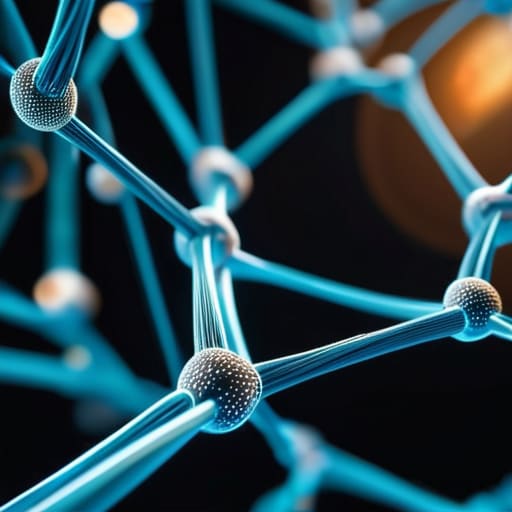
When we pull all these threads together, it becomes clear that inter-fiber molecular cross-linking isn’t just some abstract chemical curiosity; it is the literal backbone of modern material science. We’ve looked at how precise chemical bonding and the chaotic, beautiful mess of polymer chain entanglement work in tandem to transform loose fibers into a cohesive, high-performance powerhouse. Without these invisible connections, our most advanced composites would simply fall apart under pressure. It is this intricate dance of molecules that allows us to push the boundaries of what materials can actually endure, turning a collection of individual strands into a unified structural force.
As we move toward a future defined by lighter, stronger, and more sustainable engineering, mastering these molecular bridges will be the key to unlocking the next generation of innovation. We aren’t just building better parts; we are learning to manipulate the very fabric of matter to solve problems we once thought were impossible. The next breakthrough in aerospace, automotive, or renewable energy won’t just come from a bigger machine, but from a deeper understanding of the tiny, invisible architecture that holds our world together. The real strength is often found in the things we can’t even see.
Frequently Asked Questions
Does increasing the cross-linking density eventually make the material too brittle to be useful?
Absolutely. There’s a massive “sweet spot” you have to hit. If you keep cranking up the cross-linking density, you eventually lock those polymer chains so tightly that they lose all ability to slide or deform. Instead of absorbing energy, the material just snaps under pressure. You end up with something incredibly stiff, sure, but it becomes glass-brittle and useless for anything requiring real-world durability. It’s a delicate balancing act between strength and toughness.
How do we actually measure whether these molecular bonds are forming correctly during production?
So, how do we actually know if this is happening on the factory floor? We don’t just guess and hope for the best. Usually, we lean on Differential Scanning Calorimetry (DSC) to track thermal transitions, or Dynamic Mechanical Analysis (DMA) to see how the material reacts to stress. If the glass transition temperature shifts where we expect it to, we know those bonds are locking in. It’s all about catching those molecular signatures in real-time.
Can we use heat or chemical additives to trigger cross-linking after the composite has already been shaped?
Absolutely. This is actually a common trick in advanced manufacturing. You can use thermal curing—basically cranking up the heat—to kickstart those final bonds once the part is set. Chemical additives, or “latent catalysts,” work similarly; they sit dormant until a specific trigger, like temperature or UV light, wakes them up. It’s a game-changer for complex geometries where you can’t easily apply pressure during the initial shaping phase.
