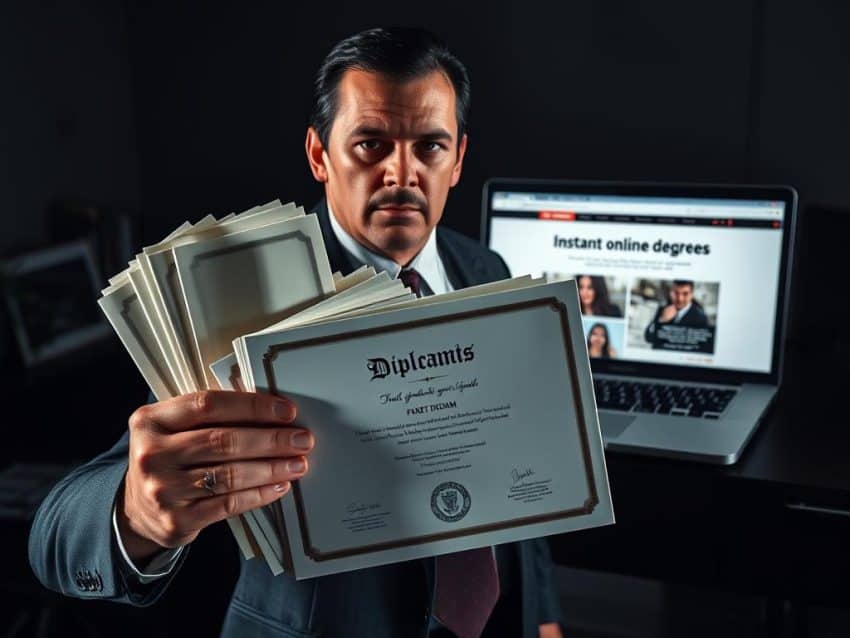
Recently, I wanted to improve my skills with an online certification course. It promised to boost my career. But, as I got into the course, I found it was just a bunch of generic videos. The provider disappeared, leaving me with worthless credentials and feeling betrayed.
This experience made me realize how important it is to know about certification scams online. With 40 million people in the UK targeted by scams in 2023, warning others is key. We need to watch out for the warning signs.
Online certification has grown a lot because of the pandemic. It’s important to be careful when looking for these opportunities. Younger people, eager to grow their careers, are often targeted by scams. By being alert and informed, we can avoid falling into these traps.
Key Takeaways
- Online certification scams are on the rise, targeting younger people.
- Learn about the signs of fake courses.
- Do your homework on course providers before signing up.
- Be cautious of offers that seem too good to be true.
- Choose accredited programs to ensure they’re real.
- Always check out reviews and testimonials from others who took the course.
Understanding the Landscape of Online Certification Scams
Online learning is growing fast, but so are scams. More people are falling for education scams. The move to digital learning has made it easier for fraudsters to target learners’ dreams.
With more online education options, scammers are getting creative. They promise unrealistic benefits and fake credentials.
The Rise of Online Learning and Certification Scams
The COVID-19 pandemic made online learning more popular. This led to a rise in certification fraud. People looking to improve their skills or change careers fell prey to scams.
Scammers use attractive marketing to lure students. They promise jobs or big salary increases. But, students often get little to no value, showing the scams’ true nature.
Common Types of Online Certification Scams
Diploma mills are a common scam. They pretend to be real schools but offer worthless degrees. Online seminars that seem real but offer no real training are also common.
Another trick is using famous people’s names to attract students. Scammers claim to work with well-known figures or institutions. Knowing these tricks can help avoid scams.

How to Identify Certification Scams
Spotting scams in online certifications needs careful attention and critical thinking. The rise in online learning has opened new opportunities. But, it also draws in fake entities looking to trick eager learners. Knowing red flags is key when choosing courses.
Red Flags to Look For
Be wary of promises of quick success or easy passing. If a course says you can become an expert overnight, be cautious. Also, watch out for high-pressure sales tactics.
A poorly designed website can hint at a lack of professionalism. If course details are unclear or missing, it might be a scam.
Researching Course Providers Effectively
To avoid fraud, I thoroughly research course providers. I look for reviews and testimonials from past students. This helps me understand their satisfaction and the course’s value.
Checking the instructors’ qualifications is also important. It shows if the course is genuine. Comparing prices to industry standards helps spot scams. By doing my homework, I can find courses that offer real value and avoid scams.
Conclusion
In this discussion, we’ve talked about how to spot and avoid scams in online certifications. With more people learning online, it’s key to know the difference between real and fake courses. Scammers use clever tricks, so we must stay alert.
To stay safe, do your homework on course providers and watch out for warning signs. Tips from trusted experts can help you find your way in the world of online learning.
This summary stresses the need to be careful when picking online courses. Use what you’ve learned from this article to protect your education investment. This way, your credentials will be worth something and recognized. Let’s make smart choices and grow our careers without worrying about scams.
