As a student, I often found myself daydreaming during lectures. My mind would wander off while my teacher shared information. It was during one class, when my instructor introduced the flipped classroom model, that everything changed.
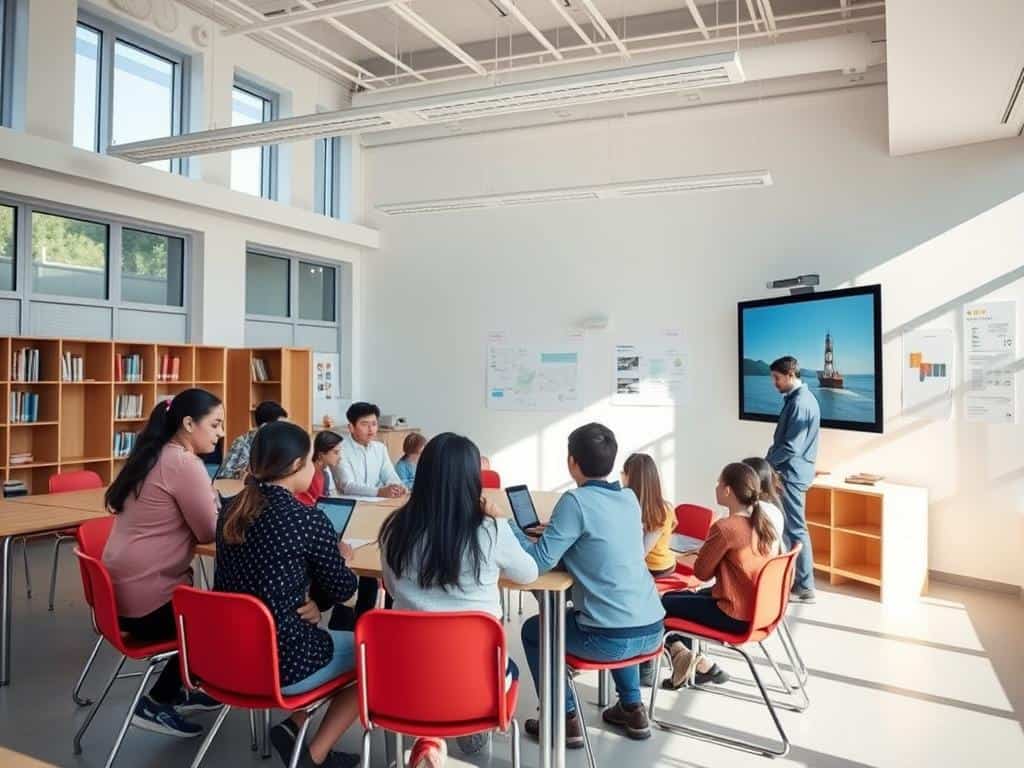
Instead of lecturing, we were assigned engaging videos and activities to complete at home. When we gathered in class, the atmosphere changed. We were no longer just listeners but active participants, ready to dive deeper into discussions.
This new approach to education flipped how we learn and engage with material. It allowed us to maximize our classroom time. Before this shift, I often struggled with complex concepts. But this new model helped me learn at my own pace, leading to a better understanding of the subject.
As educators increasingly adopt this reversed learning strategy, the benefits are clear. Not just in engagement but also in academic performance. With the right preparation and a willingness to change, both teachers and students can experience a transformative journey in learning.
Key Takeaways
- The flipped classroom model reverses traditional teaching methods.
- This approach enhances student engagement through active participation.
- Students learn at their own pace before coming to class.
- Flipped learning has shown to improve academic outcomes.
- Preparation is key for educators to effectively implement this model.
- The strategy promotes personalized learning experiences.
Understanding the Flipped Classroom Model
The flipped classroom model changes how we learn. It uses new educational technology to make learning more active. Students do hands-on activities in class, thanks to this new way of teaching.
Definition and Origins
The flipped classroom flips the usual learning setup. Students watch videos or read outside class. Then, they meet for interactive sessions. This idea started in the 1990s, thanks to Eric Mazur and his focus on peer instruction.
How It Works
In a flipped classroom, class time is for students to work together. They use online platforms for video lectures. This way, class becomes a place for discussion, problem-solving, and projects.
Historical Context
The flipped classroom came from recognizing different learning styles. Teachers saw that students learn in their own ways. With tools like Khan Academy, it became easier for teachers to try this new approach.
Benefits of the Flipped Classroom Approach
The flipped classroom model brings many benefits to learning. It changes how we teach, making learning more active, personalized, and effective.
Enhanced Student Engagement
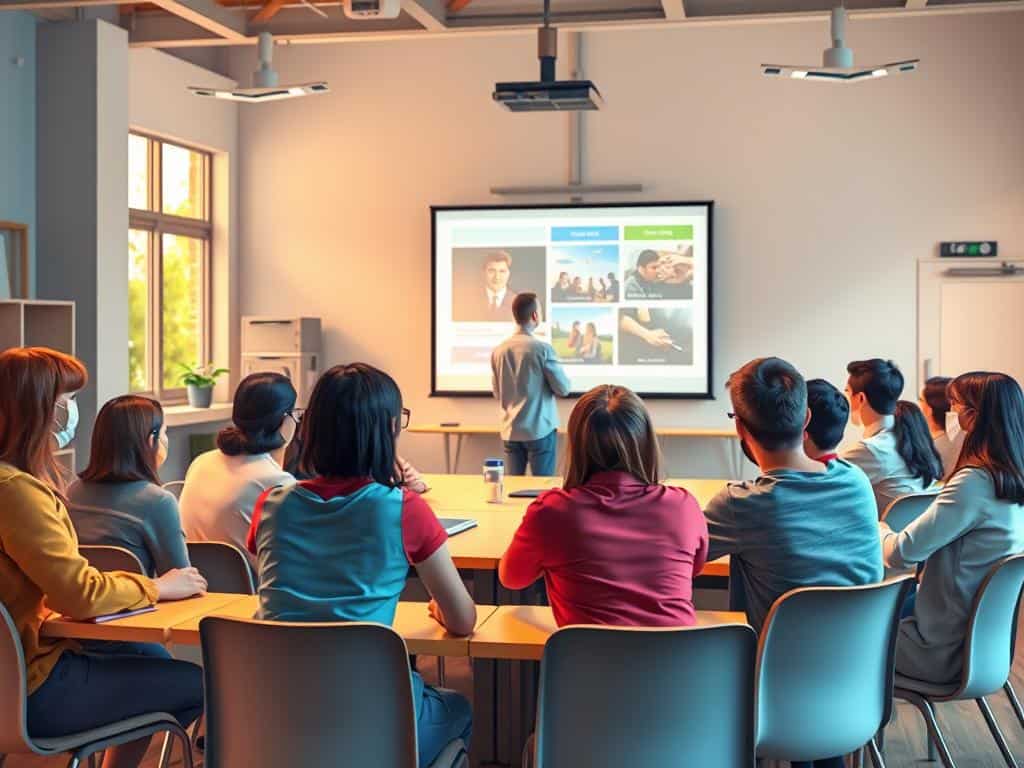
The flipped classroom boosts student engagement. It lets me engage more in class through discussions and group work. Students get to explore the material, ask questions, and work together.
This approach makes learning fun and encourages students to take charge of their education.
Personalized Learning
Flipped learning focuses on personalized education. Students can learn at their own pace, anytime. This flexibility is great for different learning needs.
It also means more one-on-one time with instructors. This allows for tailored support that fills individual learning gaps.
Better Academic Outcomes
Flipped classrooms lead to better grades. Students learn by doing and get feedback right away. This helps them understand complex topics better.
It leads to deeper learning and better academic results. These benefits help students succeed in the long run.
Conclusion
The flipped classroom model is a game-changer for learning. It lets students take control of their education. This approach makes learning more active and engaging.
With this method, I can focus on hands-on activities in class. Students can learn at their own speed before class. This way, we can all get more out of our time together.
This model opens up new ways to improve education. It allows for better understanding and support for all students. It makes learning more exciting and interactive.
More teachers are using this method, and it’s making a big difference. Students are doing better and learning more from each other. It’s a win-win for everyone involved.
