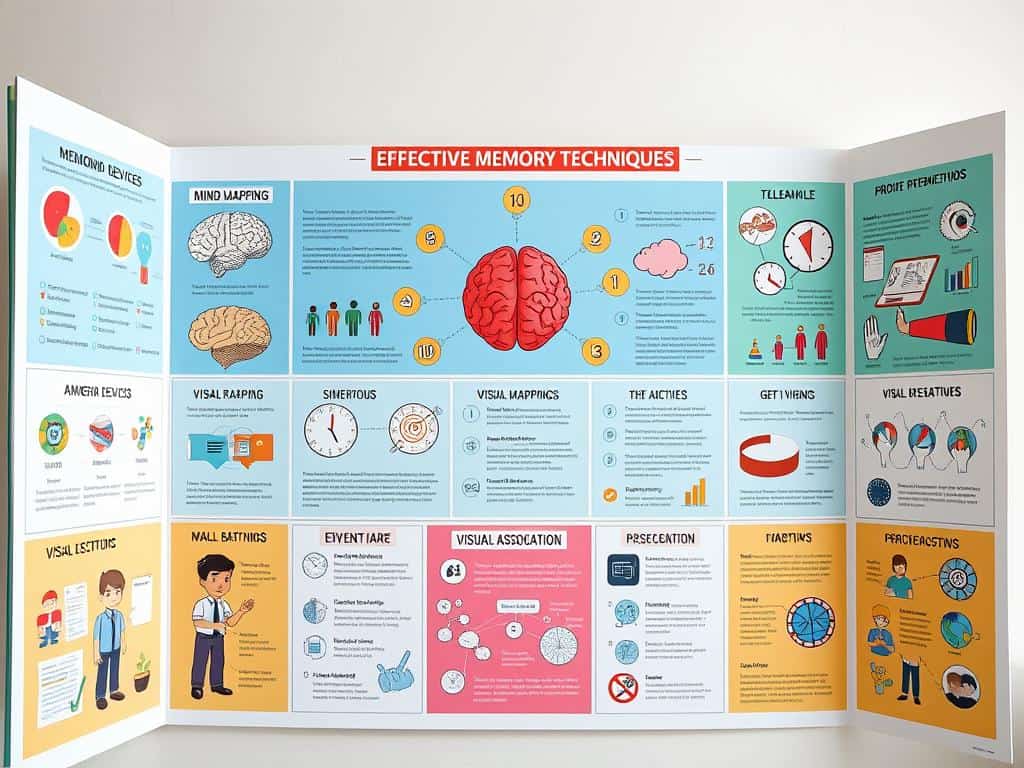
I was stuck in my college dorm, staring at pages of text for hours. I was trying to memorize facts for my exams. But it was hard to remember even the basics.
Then, I found visual learning techniques. They changed how I studied. I started using diagrams, colorful charts, and infographics. This made remembering information much easier.
Now, I see information in a way that sticks with me. This experience showed me how visuals can improve memory. It’s not just for students; it helps anyone remember better.
In the next parts, I’ll share more about visual learning. I’ll talk about how it has helped me and others remember more.

Key Takeaways
- Visual learning techniques enhance retention and comprehension.
- Utilizing diagrams and colors can boost memory improvement.
- Effective cognitive learning methods are engaging and memorable.
- Incorporating infographics aids in simplifying complex information.
- Memory exercises reinforce visual learning concepts.
The Concept of Visual Learning
Visual learning is a powerful way to understand things better. It uses pictures and images to help us grasp information. This method makes learning easier and helps us remember things longer.
For many, seeing things in pictures makes complex ideas simple. It improves how we think and learn.
Understanding Visual Learning
Visual learning turns information into images, charts, and diagrams. It helps us understand data better by using pictures. Our brains are wired to remember images more than words.
Using both words and pictures helps everyone learn. It’s great for those who find it hard to learn from just reading.
Benefits of Visual Learning
Visual learning has many benefits. It helps us remember things better because we connect ideas with images. It also makes learning more fun and engaging.
Tools like infographics or flowcharts break down hard subjects. They make learning easier and more fun. Visual learning is key to better memory and understanding.
Visual Learning Techniques for Memory Improvement
Exploring ways to boost memory, I’ve found visual learning to be key. It uses pictures and images to help us remember better. Here are some methods I use to learn more effectively.
Utilizing Diagrams and Flowcharts
Diagrams and flowcharts are great for visual learners like me. They make complex ideas easier to understand by showing how things connect. By turning text into pictures, I can see how ideas flow together.
Incorporating Colors in Learning Materials
Colors are a big part of my memory tricks. I use different colors for different topics in my notes. This makes it easier to remember what’s important. It also makes learning more fun and engaging.
Engaging with Infographics
Infographics mix text and images to make learning fun. They help me understand complex topics by breaking them down into simple visuals. This way, I stay focused and remember more.
Enhancing Memory Through Visualization Exercises
To boost my memory, I’ve tried different visualization exercises. These activities challenge my brain and help me connect new information. They make remembering things easier and more natural.
Memory Games and Exercises
Playing memory games makes learning fun for me. These games help me remember sequences and details. Doing these exercises often strengthens my brain’s memory paths.
Organizing Information Visually
Visual organization is key to better memory. I group similar information together for easier recall. Using mind maps and color charts helps me understand and remember better.
Conclusion
Visual learning techniques are key to better memory and understanding. They offer effective ways to learn that meet different needs. By using diagrams, colors, and fun exercises, we can improve our minds.
Visual learning also makes learning more fun and interactive. It helps us understand hard topics better. As we use more visuals in learning, we see how much they help our memory and understanding.
Using visual learning changes how we learn and remember things. It makes learning more fun and meaningful. I suggest trying these methods to reach your full learning and work abilities.
