As I sat in front of my laptop, my heart was racing. I was leaving my stable job after nearly a decade in marketing. Now, I wanted to explore the world of data analytics.
Creating a resume for this career switch was daunting. I knew a good resume could bridge my past and new skills. But, facing candidates with specialized analytics backgrounds felt overwhelming.
Yet, I realized my transferable skills could be the key. Many others were also considering a job switch. This was more than just writing a CV; it was telling my story in a way employers could understand.
Starting this journey showed me that changing careers is challenging but full of opportunities. In the next sections, I’ll share how we can write a resume for a career change.
Key Takeaways
- A career change can be both exciting and challenging.
- Highlighting transferable skills is essential for a successful resume.
- A well-structured resume can differentiate you from more experienced candidates.
- Understanding the specific needs of the new industry is key.
- Networking can significantly enhance your job search during a career switch.
Understanding the Importance of a Career Change Resume
A career change resume is key when you’re switching careers. It shows how your skills fit into a new field. Knowing how to make a good one can really help you stand out to employers.
What is a Career Change Resume?
A career change resume highlights your transferable skills and experiences. It’s not just about listing old jobs. It’s about showing how your past experiences make you a strong candidate for a new career.
Key Differences from Traditional Resumes
There are big differences between a career change resume and a traditional one. Traditional resumes focus on job titles and work history. But a career change resume focuses on your skills and experiences. This shows you’re adaptable and ready for new challenges in your target industry.
How to Effectively Craft a Resume for Career Switch
Starting a new career journey means making a strong resume key. It’s about identifying your transferable skills and showing them off. This way, you can make a resume that stands out to employers in different fields.
Highlighting Transferable Skills
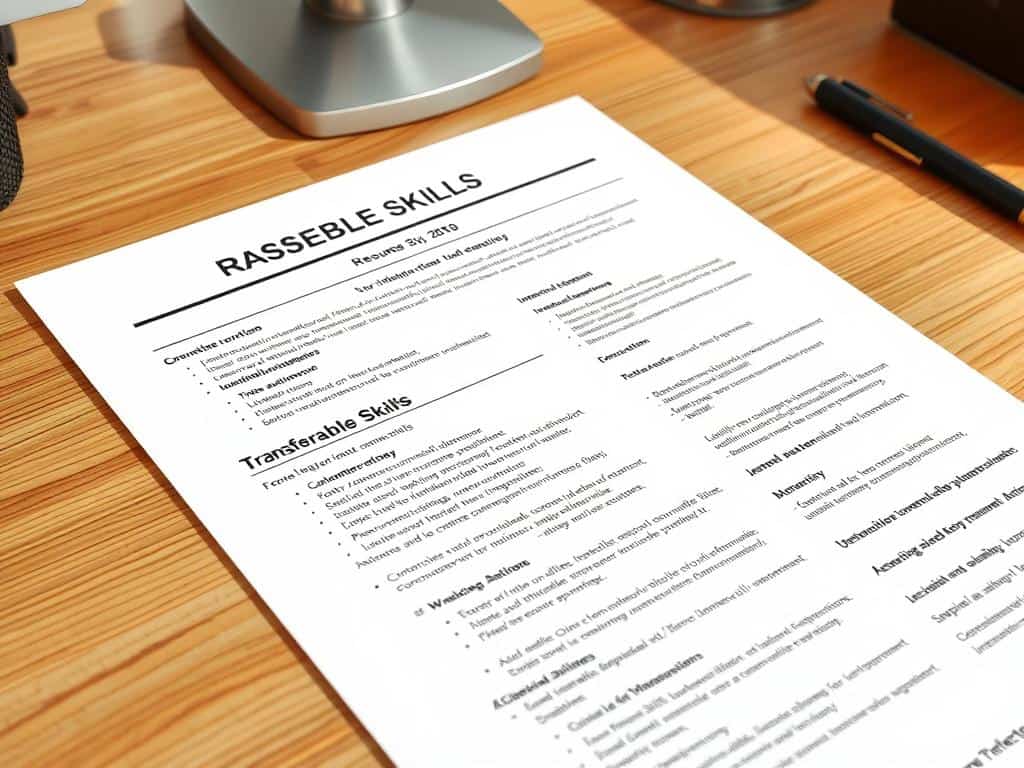
Spotting your transferable skills is vital. Skills like leadership, communication, and problem-solving are useful everywhere. Think about how your past experiences match your new career goals. Showcasing these skills can link your old jobs to your new ones.
Choosing the Right Resume Format
The right resume format is important. A combination format is great for mixing your skills and experiences. It makes your resume clear and shows off your transferable skills and job history. This format helps hiring managers see your strengths.
Structuring Your Resume Content
Keeping your resume clear and organized is essential. Begin with a brief summary of your career goals and main skills. Then, list your work experience, focusing on roles that show your transferable skills. Adding specific achievements can make your resume even more powerful, showing how you can benefit your future employer.
Conclusion
My journey in making a resume for a career change has shown how important it is. A good resume is key in applying for jobs. It helps me show off my skills in a way that catches the eye of employers.
Using smart resume strategies, like focusing on transferable skills and picking the right layout, makes my resume stand out. It’s also important to talk about any gaps in my experience. Instead of seeing them as weaknesses, I’ll use them to show my dedication to learning and growing.
In the end, a well-made resume does more than list old jobs. It tells a story of growth and readiness for something new. This careful effort will make me a stronger candidate. It will help me find exciting opportunities in my new career.
